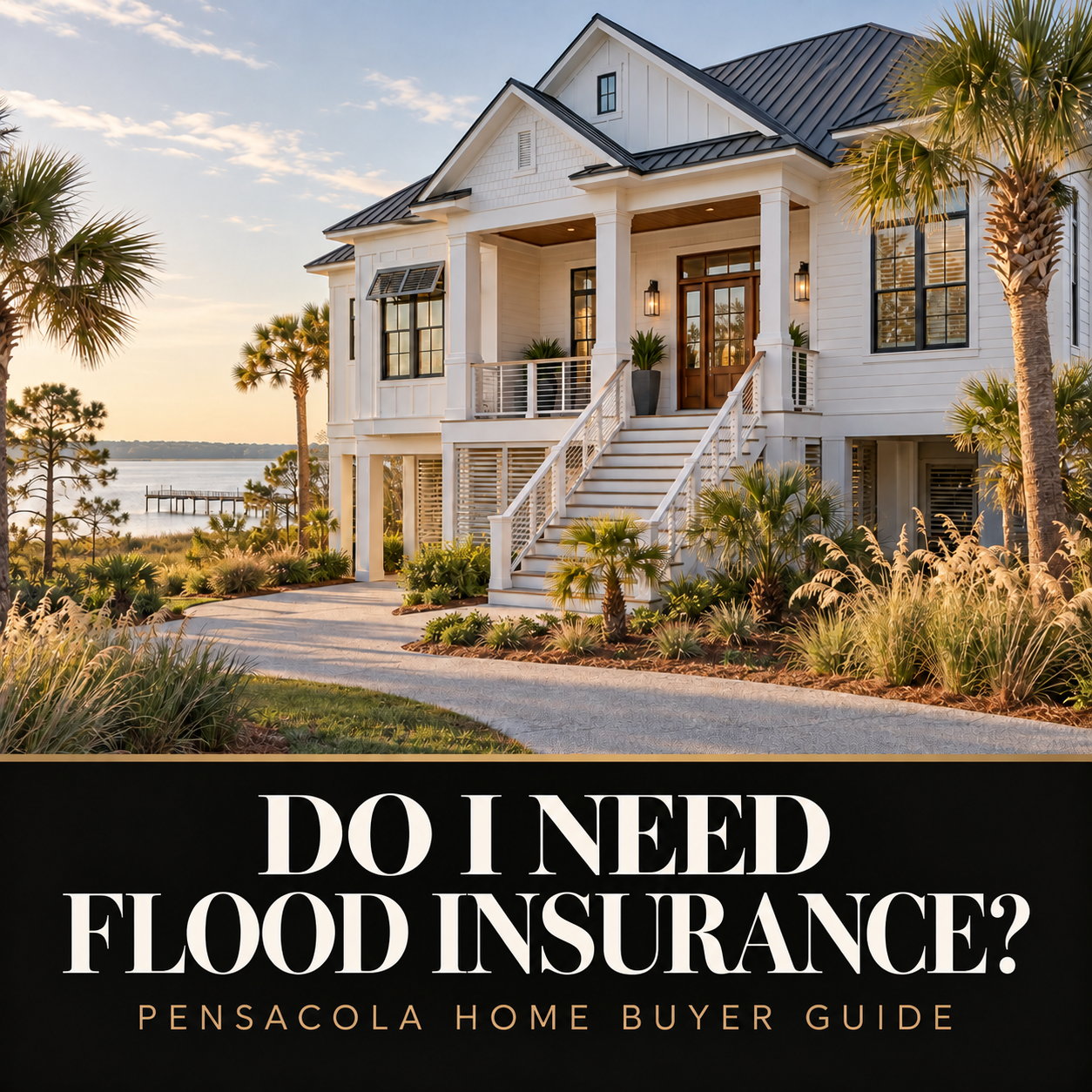
When buying a home in the Pensacola area, one of the most important questions to ask is whether the property needs flood insurance.
The short answer is that your lender may require flood insurance if the home is located in a high risk flood zone. If you are paying cash or the home is outside a required zone, coverage may be optional. However, optional does not necessarily mean unnecessary.
Because flooding can happen outside designated high risk areas, every buyer should review the property's individual flood risk and obtain an insurance quote before deciding.
Homeowners Insurance Usually Does Not Cover Flooding
Many buyers assume their homeowners insurance will cover damage caused by rising water. Standard homeowners policies typically do not cover flooding, so separate flood coverage is normally needed.
This distinction is especially important in Northwest Florida, where heavy rainfall, tropical weather, storm surge, overflowing waterways, drainage issues, and low lying land can all create flood concerns.
Wind damage, water entering through a storm damaged roof, and rising floodwater can be handled differently by insurance companies. Ask your insurance agent to explain exactly what each proposed policy covers.
When Is Flood Insurance Required?
If a home is located in a FEMA designated high risk flood area and the buyer is using certain federally backed financing, flood insurance will generally be required by the lender. High risk areas commonly include zones beginning with A or V on FEMA flood maps.
Homes in moderate or lower risk zones may not have a federal flood insurance requirement. However, lenders can have their own requirements, and flood risk does not end at the boundary of a map.
Cash buyers are not subject to a lender's insurance condition, but they should still evaluate how they would handle the financial loss if flooding occurred.
How Do I Check a Pensacola Property's Flood Zone?
Start with the exact property address rather than making assumptions based on the neighborhood or ZIP code.
FEMA's Flood Map Service Center is the official public source for National Flood Insurance Program flood hazard information. Buyers can search an address and review the applicable flood map.
Escambia County also provides a property lookup showing the current flood zone and related floodplain information. The county's current Flood Insurance Rate Maps became effective on August 19, 2025.
Santa Rosa County maintains flood maps, elevation certificates, flood studies, Letters of Map Amendment, and a property level flood risk portal. This can be helpful when researching homes in Pace, Milton, Gulf Breeze, and other Santa Rosa County communities.
Remember that a flood zone and a hurricane evacuation zone are not the same thing. An evacuation zone is used by local emergency officials when planning for storm surge and evacuations. A FEMA flood zone is used to show mapped flood risk and help determine insurance and building requirements.
How Much Does Flood Insurance Cost?
There is no single Pensacola flood insurance price.
Under the National Flood Insurance Program's current pricing approach, the premium is based on the individual property. Factors can include:
1. Distance from the coast, rivers, and other flooding sources
2. Ground elevation relative to nearby land and water
3. Foundation type
4. First floor height
5. Number of floors
6. Replacement cost
7. Selected coverage limits and deductibles
8. Flood mitigation features
Two homes in the same community can receive very different quotes, which is why buyers should not rely on what a neighbor pays.
Private flood insurance may also be available. Ask a knowledgeable insurance agent to compare the coverage, exclusions, deductibles, and lender acceptance of each option.
What Should Buyers Request Before Making a Decision?
Florida law requires a residential property seller to provide the buyer with a flood disclosure at or before the sales contract is executed. The disclosure addresses certain flood related information known to the seller.
That disclosure is helpful, but it should not be your only source of information.
I recommend that buyers also:
1. Check the property on the current official flood map.
2. Review the seller's flood disclosure carefully.
3. Ask whether an elevation certificate is available.
4. Obtain actual flood and homeowners insurance quotes.
5. Confirm all insurance requirements directly with the lender.
6. Ask the inspector to note visible drainage or previous water intrusion concerns.
7. Review the cost of coverage before the applicable contract deadlines expire.
An elevation certificate can provide useful information about the building and its elevation. If a homeowner believes a mapped boundary does not accurately reflect the structure's location or elevation, professional documentation may also be needed when exploring a Letter of Map Amendment.
Do Not Wait Until Closing Week
Flood insurance through the National Flood Insurance Program typically has a 30 day waiting period, although exceptions may apply in certain situations, including coverage connected with a loan closing.
Even when an exception applies, waiting until the last minute can create unnecessary stress. Insurance availability and cost should be investigated early enough to affect your purchasing decision.
This is particularly important when considering coastal, waterfront, older, or low lying properties in areas such as Pensacola Beach, Perdido Key, Gulf Breeze, and communities near bays, rivers, creeks, and wetlands. However, buyers should review flood risk for every property, including homes farther inland in Pensacola, Cantonment, Beulah, Pace, and Milton.
Make the Decision With Real Numbers
Finding out that flood insurance is required does not automatically mean a home is a poor choice. It means the cost and risk need to be understood before moving forward.
The best approach is to investigate early, obtain written quotes, and calculate the complete monthly expense of owning the property. That includes the mortgage payment, property taxes, homeowners insurance, possible flood insurance, association fees, utilities, and expected maintenance.
If you are planning to buy in the Pensacola area, I would be happy to help you research the property, coordinate with your lender and insurance agent, and make sure you have the information needed to make a confident decision.